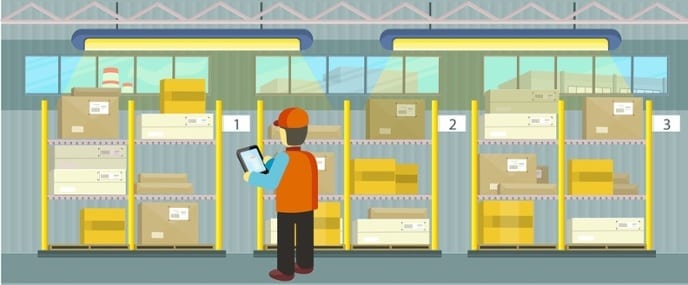
The logic behind retail inventory management is straightforward—have enough stock to keep the supply-demand wheel turning.
If your business does well on national and global platforms, you’ll be housing a lot more products than you first started. Tracking what’s coming in and leaving your stock will be an insurmountable task in such a situation. And failure to manage and monitor this will eventually leave a gap in your inventory.
Gaps can be understood as inconsistencies which bring an end to your business or result in losses. On that account, identifying them in advance will determine the success or failure of your retail business. This is the reason why you should integrate an inventory management system. Not only does it flag inconsistencies, but also prepares contingency plans to manage your stock better, and keep your business running.
Here are a few advantages of inventory management integration which mend such inventory gaps and curb the possibility of losses.
Financial management and planning improves with inventory management because you know how much of a particular product on sale should be stocked. And once you figure this out, there aren’t any excess orders or shortages, consequently conserving your money in the long run.
Inventory management also lets you track thefts by employees and customers. If such thefts aren’t identified, the money will come out of your pockets.
An inventory management system helps you keep an eye on the level of stock at your disposal. What’s more, you can conveniently locate them, determine their prices, and identify suppliers.
There’s no point in stocking products that have low market value or demand. Inventory management helps to identify such products allowing you to lower their volumes or stop stocking them altogether.
Alternatively, there can be products that really do well on the market. And this can mean serious money through improved sales. An inventory management system identifies such products by tracking their demands, and informs you about the same. When this happens, you should instantly stock up.
It alright to have humans look after your inventory. But the process is often taxing and error-prone. A single mistake or overlooked detail can result in major losses. Moreover, rectifying these mistakes takes more time and effort. Thankfully, an inventory management system does not come with such errors, thereby limiting the need for human labour.
Although machines might be quicker and more efficient, they have to be operated by humans. This is where an inventory management system can come handy by offering valuable training for operating such systems. The Software helps them conserve their time, allowing your business to make better use of available resources.
One of the greatest advantages of investing in inventory management is retention of loyal customers. There’s a reason why customers keep flocking time and again at your store, they like what you sell and how you sell it. Keeping hold of such customers is important as they not only keep spending at your store, but also share positive reviews. You can identify such customers and their browsing pattern with retail analytics, equip it with inventory management system, and stock up on their products of interest which have the potential to be sold.
The truth’s been spoken—inventory management helps businesses prosper. If the demand for commodities rises, so should the supply, and there’s no better way than inventory management to balance both.
Competitive price intelligence is the process of researching, gathering, analyzing, and acting on pricing data from competing organizations, including how…
Holiday shopping trends of 2026 point to a clear pattern: online growth is outpacing overall retail. According to Deloitte, eCommerce…
AI-driven shopping is already changing how retailers think about merchandising. Traffic from AI sources to U.S. retail sites grew 393% year over…
Traffic to US retail sites from generative AI platforms jumped 4,700 percent year over year, according to Adobe Analytics. Nearly two-thirds of global…
Retail pricing has always been a balancing act: win demand, protect margin, and maintain shopper trust. But in the agentic commerce era,…
Pricing is one of the most important drivers of retail growth. The right pricing strategy helps retailers increase revenue, protect margins, attract…
This website uses cookies.
