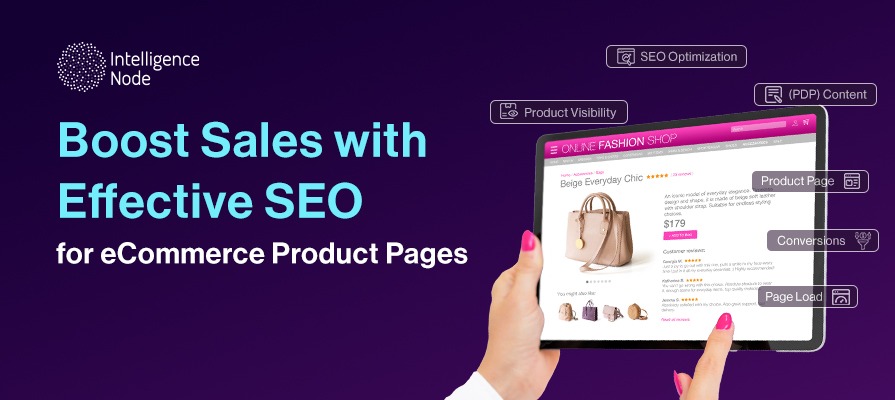
eCommerce spending is soaring, and everyone is trying to capture market share. According to Forrester, US online retail sales are set to hit $1.6 trillion by 2028. That’s 28% of all retail sales. And let’s not forget Amazon Storefronts, which now features over 2.5 million products from around 30,000 businesses.
These stats show that the competition is fierce. If you miss, your competitors will gladly take your spot in Google’s search rankings. If you fail to capitalize on SEO opportunities, your rivals will outperform you.
One common misconception in eCommerce is that shoppers typically land on the homepage or category page first and then work their way to a product page. This idea couldn’t be further from the truth—and it’s a huge missed opportunity.
Product pages often attract significant organic traffic, with visitors who are ready to buy. If these pages aren’t at the heart of your SEO strategy, you’re leaving money on the table.
While ad spending can boost your visibility, it’s not sustainable in the long run. Relying only on ads can be costly. To maintain growth, you need a strong SEO strategy that supports your media spending.
Additionally, Millennials and Gen Zs trust organic search results more than sponsored results and paid ads. Studies suggest that 53.3% of online shoppers prefer clicking on organic results over paid ads (27%).
Keep reading to learn how to optimize SEO for eCommerce product pages to maximize your performance.
An eCommerce product page is your digital storefront for a specific product. It showcases all the details customers need to make a decision. This includes product specs, features, pricing, and reviews and ratings. A clear, compelling page helps shoppers quickly understand what they’re buying. It guides them through the benefits and value of the product.
A well-designed page can turn casual visitors into loyal customers. When your page is optimized, it can drive more sales and improve conversions. It’s not just about information but how you present it. The right design and information can have a significant impact on your revenue.
It’s important to pay attention to SEO for your product pages as it attracts potential consumers from search engines like Google. Without solid eCommerce SEO, even the best-designed product detail pages (PDPs) will be virtually invisible to online shoppers. The alternative is to rely on paid ads, but that can get pricey quickly. As mentioned above, shoppers are increasingly skeptical of products that only surface at the top of results pages due to paid digital ads – you must showcase why your product is the best option in detail.
Here’s why optimizing your PDPs for SEO is so important:
With these benefits in mind, let’s explore how to boost the search visibility of your eCommerce product pages.
To make your product pages stand out, you need solid SEO practices. These help your pages appear in search results and attract the right shoppers.
Here are five essential SEO tips for your product pages:
Your product titles and descriptions need to be clear and informative. Include the main keyword early in the title. Make it sound natural, not stuffed with keywords.
In your descriptions, focus on key features, benefits, and real-world use cases. Use long-tail keywords that match what your customers are searching for. This will help your product pages show up in more searches.
Adding structured data helps search engines understand your product details, like price, availability, and reviews. This lets search engines display rich snippets with key info directly in search results.
These snippets make your page more attractive and clickable, driving more traffic.
A fast-loading page is critical for both SEO and user experience. Slow pages cause higher bounce rates, which can hurt your rankings. Studies show that when page load time increases from 2 to 5 seconds, bounce rates spike from 9% to 38%. This can seriously impact your sales.
To speed up your pages, compress images, use browser caching, and reduce JavaScript. Tools like Google PageSpeed Insights can help pinpoint and fix any issues.
Google prioritizes mobile-optimized pages for ranking, especially since 91% of people shop on smartphones.
Hence, ensure your product pages have responsive design elements, easy navigation, and fast load times on mobile. A seamless mobile experience can improve conversion rates and drive traffic by 54.4%.
Visual content is a big part of eCommerce. High-quality images and videos help customers understand your product better. In fact, studies by Etsy show that 90% of consumers consider image quality “very or extremely important” when making a purchase decision online.
Using descriptive file names and alt text for your images not only improves accessibility for visually impaired shoppers but also boosts your image search rankings. Optimizing images this way can increase search engine visibility, driving more organic traffic to your pages.
Plus, videos showcasing your product in use or providing tutorials can also improve engagement and keep consumers on the page longer.
If you want to improve your eCommerce SEO, you need to improve and optimize your product page titles, descriptions, and attributes. A tool like Intelligence Node’s Digital Shelf Analytics can help you do just that. With AI-powered content management and cross-platform optimization, you can excel on the “digital shelf” and improve organic visibility and engagement of your product pages through advanced analytics.
Here’s how Intelligence Node can help you boost the SEO of your product pages:
Real-time insights can transform how brands approach search visibility. Intelligence Node’s advanced product matching engine provides a clear view of what drives search rankings. This helps brands identify trends and competitor strategies that improve visibility.
The platform tracks performance across both paid and organic search results on marketplaces and search engines. It also monitors trending and best-selling competitor products. With actionable recommendations, brands can refine their strategies, boost their digital shelf share, and maintain an edge in the visibility race.
Intelligence Node’s bespoke retail APIs offer unmatched accuracy and speed, with 10-second data refresh rates and 99% product matching accuracy. These APIs allow you to easily access pricing, assortment, and visibility data in a format tailored to your needs, enabling brands to respond quickly and optimize their market position in the constantly evolving digital landscape.
Learn More : https://www.intelligencenode.com/blog/mastering-share-of-search-digital-shelf/
One of the first steps to improving SEO is auditing your product descriptions. Intelligence Node’s platform makes it easy to review and refine your PDP content. It helps you optimize your product titles and descriptions for better search rankings.
The platform also integrates with your backend systems, automating the process and ensuring your content follows marketplace guidelines. This can help prevent brand dilution and lost sales, all while boosting discoverability.
Generative AI can take your PDP content to the next level. It helps create optimized, human-like product descriptions and images that align with top-ranking products across the web. With access to a massive product database, Intelligence Node helps you fine-tune your content for maximum visibility and conversions.
Intelligence Node doesn’t just help with content audits. It automates content and attribute optimization for your product listings.
Seamlessly integrate with native eCommerce solutions
Once integrated with your eCommerce platform, it lets you push content and image updates with a click. This centralizes your content management and ensures all updates are live in real time.
The AI technology also automates much of the enrichment process, making it quicker and easier to maintain fresh, SEO-optimized content.
By using Intelligence Node’s digital shelf platform, you can streamline the SEO optimization process for your eCommerce product pages. This ensures you stay ahead of the competition and maintain strong visibility in search results.
If you’re serious about optimizing your product page, don’t just stop at basic SEO and user experience. You’ll need to go deeper into other crucial aspects of your product pages. For example, implementing the Product and Offer Schema helps Google easily index your product details and display them as rich results in search.
In addition, prioritize fast loading times, include user reviews, and build trust with your visitors. Trust signals, like secure payment options, make a big difference. Continuous testing is crucial to ensure everything works smoothly. Small adjustments can lead to big improvements over time.
If you feel confused, Intelligence Node can help. With advanced analytics and AI-driven insights, we’ll help you optimize your product pages to improve visibility and conversions. Ready to boost your eCommerce SEO? Apply for a free demo today and get started!
Constant shifts in consumer behavior are translating into outsized business impact: from missed conversions and slower inventory turns to weaker margins. Shopping is no longer simple or linear; consumers move between…
According to McKinsey, retailers that lead in digital product execution grow 2x faster than their peers. In today’s hypercompetitive market,…
The 2025 holiday season is around the corner. And it comes at a time where economic uncertainty looms over our…
Optimizing the digital shelf means making sure your products show up where shoppers search and buy, especially when you’re leveraging…
We may still be weeks away from the holiday rush, but smart retailers know now is the time to start…
Intelligence Node is proud to be the Official Awards Sponsor for the Women Leaders Summit & Awards India 2025, taking…
This website uses cookies.



